
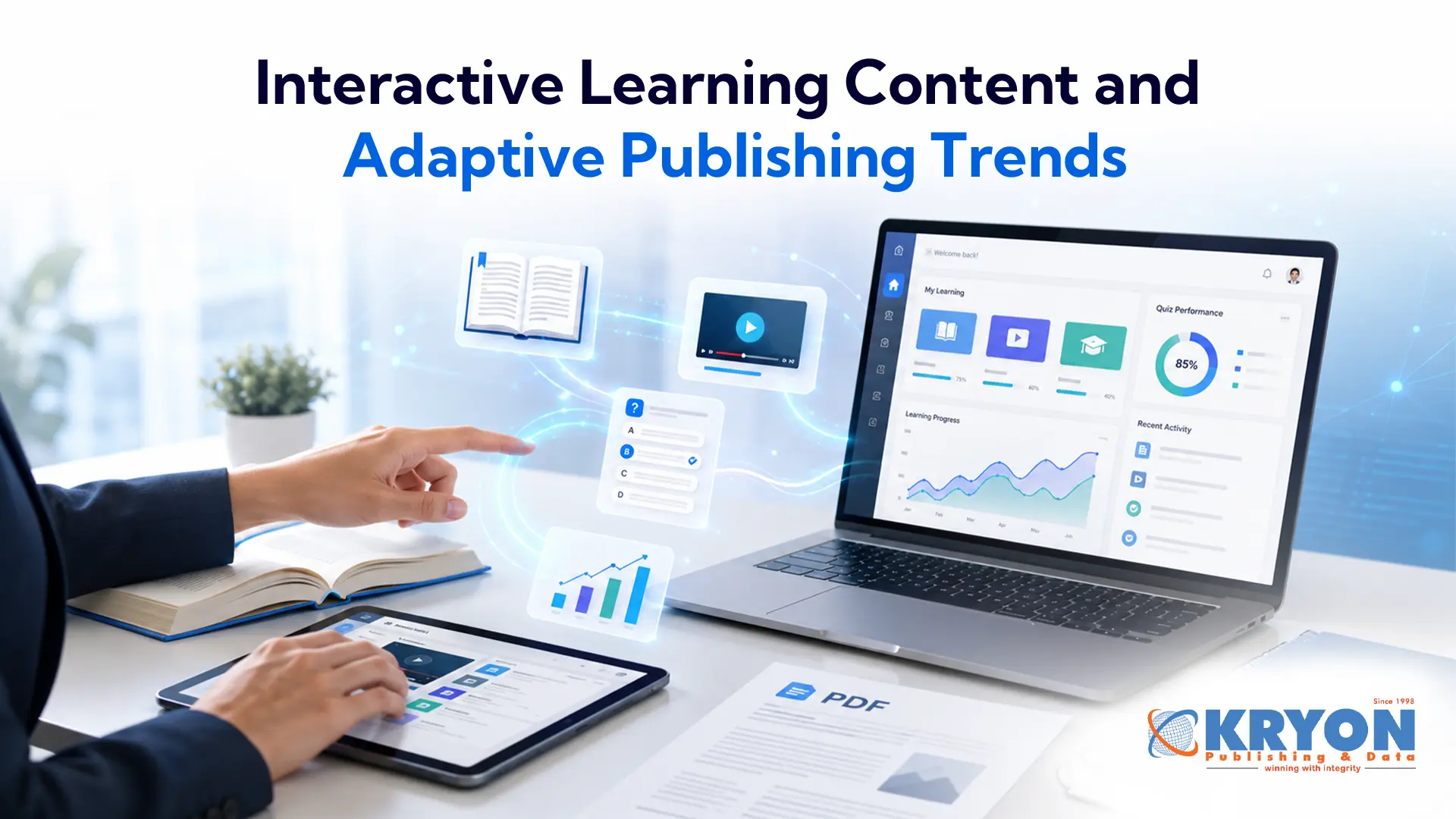
The publishing industry is undergoing a major transformation driven by evolving learner expectations, digital-first content consumption, artificial intelligence, and immersive educational technologies. Traditional static publishing models are rapidly being replaced by interactive, adaptive, and personalized content ecosystems that improve engagement, accessibility, and learning outcomes.
Interactive learning content combined with adaptive publishing technologies is redefining how educational institutions, enterprises, publishers, and training organizations create, distribute, and consume knowledge. From AI-powered learning pathways and dynamic assessments to accessibility-driven digital experiences, modern publishing is becoming more intelligent, data-driven, and learner-centric.
This white paper explores the emerging trends shaping adaptive publishing, the growing role of interactive learning content, industry challenges, technological advancements, and the future opportunities for publishers embracing digital transformation.
The digital revolution has fundamentally changed how knowledge is accessed and consumed. Modern learners demand personalized, engaging, and interactive experiences rather than static text-based materials. Educational publishers, scholarly organizations, and enterprise learning providers are increasingly adopting adaptive publishing strategies to remain competitive in an evolving digital ecosystem.
Interactive learning content enables users to actively participate in the learning process through multimedia elements such as:
Interactive assessments
Simulations and animations
Embedded videos
AI-driven recommendations
Dynamic quizzes
Real-time feedback systems
Gamified learning modules
Simultaneously, adaptive publishing technologies allow content to automatically adjust based on learner behavior, device compatibility, accessibility requirements, and user preferences.
Together, these innovations are reshaping the future of publishing.
Traditional publishing workflows were designed for print-centric distribution and static digital formats. However, the modern digital environment demands:
Faster content delivery
Multi-device compatibility
Accessibility compliance
Personalized user experiences
Continuous content updates
Data-driven learning optimization
As a result, publishers are transitioning toward:
XML-first publishing workflows
AI-assisted content management
Cloud-based publishing platforms
Structured content ecosystems
Dynamic digital learning environments
This shift enables organizations to create reusable, scalable, and future-ready content architectures.
Artificial Intelligence is enabling publishers to deliver highly personalized learning experiences by analyzing user behavior, performance patterns, and engagement metrics.
Key capabilities include:
Adaptive learning pathways
Intelligent content recommendations
Automated assessments
Predictive learner analytics
AI-generated summaries and metadata
AI-driven systems can dynamically modify learning content difficulty levels based on user performance, improving knowledge retention and engagement.
Modern learners engage more effectively with visually rich and interactive content formats.
Growing adoption includes:
Interactive eBooks
Augmented Reality (AR)
Virtual Reality (VR)
3D simulations
Video-integrated learning modules
Gamification techniques
These technologies create experiential learning environments that improve learner participation and comprehension.
Accessibility is becoming a strategic priority across publishing ecosystems. Regulatory standards and inclusive education initiatives are driving publishers toward universally accessible digital content.
Accessibility-focused publishing trends include:
AI-generated alt text
EPUB accessibility compliance
Screen reader optimization
Semantic XML structuring
WCAG-compliant digital platforms
Audio-enabled content experiences
Accessible publishing ensures equal access to knowledge for diverse user communities.
Interactive publishing platforms now provide advanced analytics that help publishers understand:
Learner engagement patterns
Completion rates
Content effectiveness
User interaction behavior
Knowledge gaps
These insights enable continuous content refinement and performance optimization.
Adaptive publishing refers to intelligent content delivery systems capable of dynamically modifying content presentation and structure based on user requirements.
Core technologies driving adaptive publishing include:
Artificial Intelligence
Machine Learning
Natural Language Processing
Cloud Computing
Structured XML Workflows
Metadata Automation
Learning Management System Integration
Adaptive publishing platforms support:
Multi-format content delivery
Responsive digital experiences
Personalized content rendering
Automated workflow management
Real-time content updates
Despite rapid innovation, publishers face several operational and technological challenges:
Managing large volumes of structured multimedia content requires advanced workflow systems and automation capabilities.
Integrating AI, LMS platforms, accessibility tools, and publishing workflows can be resource-intensive.
Publishers must ensure scalability while maintaining content quality and performance.
Meeting global accessibility standards requires ongoing investment in technology and expertise.
Publishing professionals need upskilling in digital technologies, AI tools, and structured content management.
The future of publishing will increasingly revolve around:
Intelligent automation
Hyper-personalized learning experiences
AI-assisted editorial workflows
Real-time adaptive content delivery
Immersive educational ecosystems
Cross-platform digital accessibility
Organizations that successfully embrace adaptive publishing technologies will gain competitive advantages through improved learner engagement, operational efficiency, and scalable digital content delivery.
The convergence of AI, interactive learning, accessibility, and structured publishing workflows is expected to define the next generation of digital publishing transformation.
Interactive learning content and adaptive publishing are no longer emerging concepts — they are becoming foundational pillars of the modern publishing ecosystem.
As learner expectations evolve and digital transformation accelerates, publishers must move beyond traditional static content models toward intelligent, scalable, and personalized publishing strategies.
Organizations investing in adaptive publishing technologies today are positioning themselves to lead the future of education, scholarly communication, and enterprise learning.
The next era of publishing will be defined not simply by content delivery, but by intelligent knowledge experiences that are interactive, accessible, personalized, and continuously evolving.
Interactive learning content refers to digital educational materials that include multimedia elements such as quizzes, videos, simulations, and gamification to improve engagement and learning outcomes.
Adaptive publishing is an intelligent content delivery approach where learning materials automatically adjust based on user behavior, device, accessibility needs, and learning preferences.
AI enhances learning content by enabling personalized learning paths, intelligent recommendations, automated assessments, and real-time content adaptation based on learner performance.
Accessibility ensures that digital content is usable by all learners, including those with disabilities, through features like screen reader support, alt text, and WCAG compliance.
Adaptive publishing is powered by AI, machine learning, cloud computing, NLP, XML workflows, metadata automation, and LMS integration.
It improves learner engagement, increases content effectiveness, enables personalized learning experiences, and supports scalable digital education delivery.
The future involves AI-driven personalization, immersive AR/VR experiences, real-time adaptive content, and fully intelligent digital learning ecosystems.




Copyright @ 2025, Kryon Publishing Services. All Rights Reserved

